You can learn a lot about a country through its landscapes, its architecture, and its traditions.
But if you really want to understand it, start at the table.
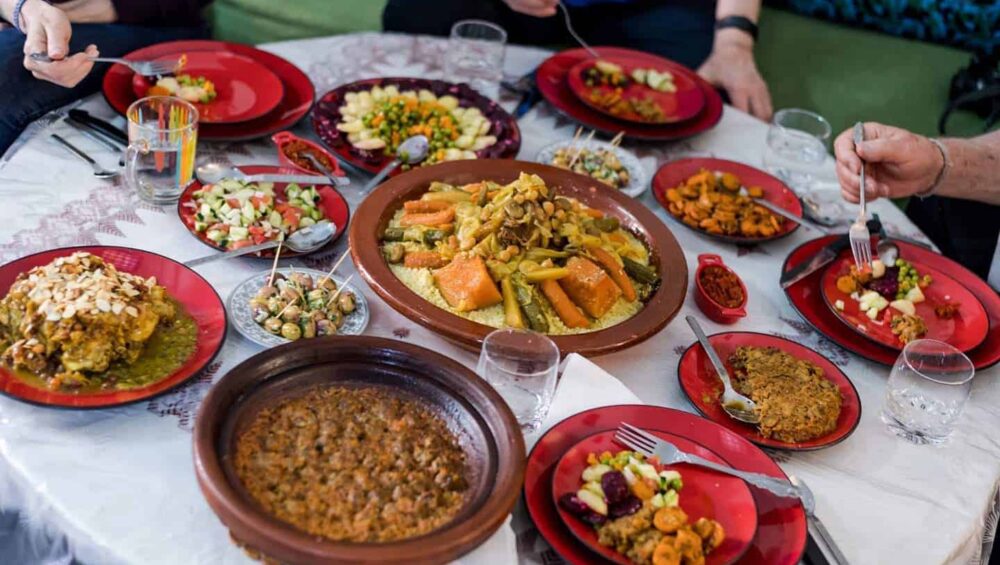
Moroccan food is one of the richest parts of the travel experience. It is generous, layered, slow, fragrant, and deeply tied to hospitality. Meals are rarely just about eating. They are about gathering, sharing, pausing, and enjoying the moment properly.
For many travelers, food becomes one of the strongest memories of Morocco. Not only because the dishes are delicious, but because they are connected to place: a tagine in the Atlas Mountains, fresh fish on the coast, warm bread in the medina, mint tea on a rooftop, oranges with cinnamon after dinner.
If you are planning a trip, here are the Moroccan foods you have to try at least once.
Tagine
If there is one dish most closely associated with Morocco, it is tagine.
Named after the earthenware pot it is cooked in, tagine is less one recipe than a whole style of slow cooking. Meat, vegetables, herbs, spices, preserved lemon, olives, dried fruit, or nuts are gently cooked together until everything becomes tender and full of flavor.
There are many versions, and that is part of the charm.
You might try:
- chicken with preserved lemon and olives
- lamb with prunes and almonds
- kefta with eggs and tomato sauce
- vegetable tagine with seasonal produce
A good tagine is not heavy. It is slow, aromatic, balanced, and deeply comforting.
Couscous
Couscous is one of the great classics of Moroccan cuisine.
Light, soft, and carefully steamed, it is usually served with vegetables and meat, often with a flavorful broth on the side. In many homes, couscous is especially associated with Friday, when families gather for a long shared meal.
For travelers, couscous can seem simple at first glance, but when made well, it is anything but basic. The texture, the seasoning, and the harmony between the grains, vegetables, and sauce make it one of the most satisfying dishes in the country.
It is the kind of meal that feels both comforting and ceremonial at the same time.
Pastilla
Pastilla is one of Morocco’s most distinctive dishes.
It combines sweet and savory in a way that surprises many first-time visitors. Traditionally made with pigeon, though often served with chicken today, it is wrapped in delicate pastry and layered with spiced meat, almonds, and a light dusting of powdered sugar and cinnamon.
That combination may sound unusual until you taste it.
A well-made pastilla is crisp, rich, aromatic, and beautifully balanced. It feels celebratory, almost theatrical, and it is one of the dishes that shows how refined Moroccan cuisine can be.
If you want to try something that feels uniquely Moroccan, start here.
Harira
Harira is more than a soup.
It is one of the most beloved dishes in Moroccan cooking and is especially associated with Ramadan, though it is enjoyed throughout the year. Made with tomatoes, lentils, chickpeas, herbs, and often a little meat, it is hearty without being heavy.
Served with dates, bread, or chebakia, harira is one of those dishes that feels deeply rooted in daily life.
For travelers, it is a wonderful way to experience the more comforting, home-style side of Moroccan food.
Kefta
Kefta usually refers to seasoned minced meat, often beef or lamb, shaped into small meatballs or patties and cooked in different ways.
One of the best versions to try is kefta tagine, where the meat is simmered in a spiced tomato sauce and finished with eggs cracked directly into the pan.
It is simple, flavorful, and incredibly satisfying.
Served with fresh bread, it is the kind of dish that feels informal but unforgettable.
Zaalouk
Zaalouk is one of the side dishes you should not overlook.
Made from cooked eggplant, tomatoes, garlic, olive oil, and spices, it is smoky, soft, and full of flavor. You eat it with bread, often as part of a spread of salads and small starters.
It may not have the fame of tagine or couscous, but it is often one of the dishes people end up loving most.
Good zaalouk tastes fresh, generous, and deeply Moroccan.
Taktouka
Taktouka is another classic Moroccan salad, usually made with tomatoes, roasted green peppers, garlic, olive oil, and spices.
It is bright, soft, and slightly smoky, and it appears often as part of a table of small dishes before the main meal.
Like zaalouk, it reminds you that in Morocco even the simplest dishes can carry a lot of character.
Rfissa
Rfissa is rich, comforting, and full of tradition.
It is often made with shredded msemen or trid pastry, chicken, lentils, onions, and a fragrant sauce seasoned with fenugreek and ras el hanout. It is a dish that feels generous and deeply home-centered.
Rfissa is not always the first Moroccan dish tourists hear about, but it is absolutely worth trying if you want something more rooted in family cooking and special occasions.
Mechoui
For meat lovers, mechoui is a must.
This is slow-roasted lamb, traditionally cooked until it becomes meltingly tender and deeply flavorful. It is often seasoned very simply, allowing the quality of the meat and the cooking method to speak for themselves.
Done well, mechoui is rich, smoky, and unforgettable.
Bissara
Bissara is a humble dish, but one with real charm.
Made from split fava beans or peas, blended into a thick soup and topped with olive oil, cumin, and sometimes paprika, it is especially popular as a warming breakfast or simple meal.
It is the kind of dish that feels honest and local. Not elaborate, but deeply part of everyday Moroccan life.
Msemen and baghrir
If you want to understand Moroccan breakfast culture, start with breads and pancakes.
Msemen is a flaky, layered flatbread, often served with honey, butter, cheese, or jam. It is crisp outside, soft inside, and impossible not to love.
Baghrir, often called the “thousand-hole pancake,” is softer and spongier, perfect for soaking up butter and honey.
Served with mint tea or coffee, these are some of the most comforting things you can eat in Morocco.
Fresh bread
Bread is everywhere in Morocco, and it matters.
Served at almost every meal, used to scoop salads and tagines, and baked fresh daily, bread is not an extra. It is central to the table.
Simple as it sounds, warm Moroccan bread with olive oil, salad, or a slow-cooked dish can be one of the great pleasures of the trip.
Mint tea
You cannot talk about Moroccan food without mentioning mint tea.
Sweet, fragrant, and deeply linked to hospitality, mint tea is more than a drink. It is part of the rhythm of everyday life. It marks welcomes, pauses, conversations, and shared time.
You will drink it in riads, homes, restaurants, terraces, camps, and shops.
By the end of the trip, it often becomes one of the flavors most associated with Morocco itself.
Chebakia
If you have a sweet tooth, try chebakia.
This sesame-coated pastry is folded into a flower-like shape, fried, and covered in honey. It is often linked with Ramadan and pairs especially well with harira.
It is sticky, rich, floral, and unlike most pastries travelers are used to.
Orange slices with cinnamon
Sometimes the simplest desserts are the most memorable.
Fresh orange slices sprinkled with cinnamon may sound modest, but in Morocco, they often make the perfect ending to a meal: refreshing, fragrant, and light after richer dishes.
It is a small detail, but one that many visitors remember.
Fresh seafood on the coast
If your journey includes Essaouira or other coastal towns, do not miss the seafood.
Grilled fish, calamari, shellfish, and simple seaside cooking offer a different side of Moroccan cuisine. Less spiced, more direct, but just as enjoyable.
It is a reminder that Moroccan food is regional, and that the coast brings its own identity to the table.
What makes Moroccan food special
What makes Moroccan food memorable is not only the spices or the recipes.
It is the feeling around it.
Meals are slow. Bread is shared. Tea is poured with care. Hospitality is part of the flavor. There is warmth in the way food is served, and generosity in the way it is offered.
You do not just taste Morocco.
You are welcomed into it.
Final thoughts
If you are wondering what Moroccan food you have to try at least once, start with the classics: tagine, couscous, pastilla, harira, kefta, msemen, and mint tea.
But do not stop there.
Try the salads, the breads, the soups, the sweets, the regional specialties, and the simple dishes that may never appear on a “must-eat” list but end up becoming your favorites.
Because in Morocco, food is not a side note to the journey.
It is one of the ways the country introduces itself to you.
At Riad and Road, we believe the best trips through Morocco are not only about beautiful places, but also about meaningful flavors, shared tables, and the kind of meals you remember long after you return home.
Because sometimes, the fastest way to fall in love with Morocco is one dish at a time.